Ngada
A forgotten matrilineal tribe in the heart of Flores
Until recently, Katerina and I thought the only matrilineal group in Indonesia was the Minangkabau of West Sumatra, but we were wrong!
Tucked away in Central Flores there is another matrilineal group – the Ngada!
Oddly, we found no mention of Ngada, nor any of their striking indigo ikats (traditional handwoven wraps) in Indonesia’s National Museum – it really did seem like they have been forgotten!
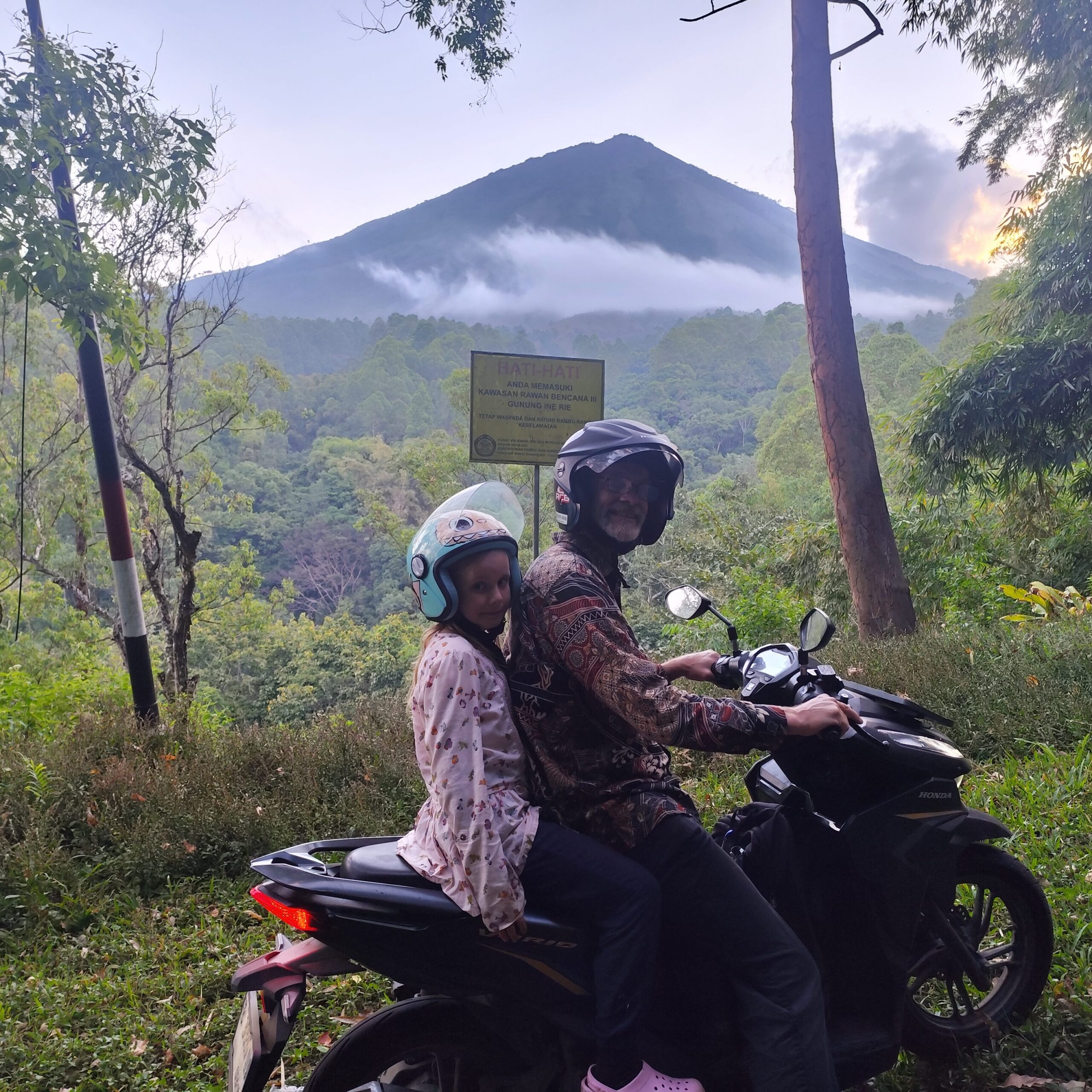
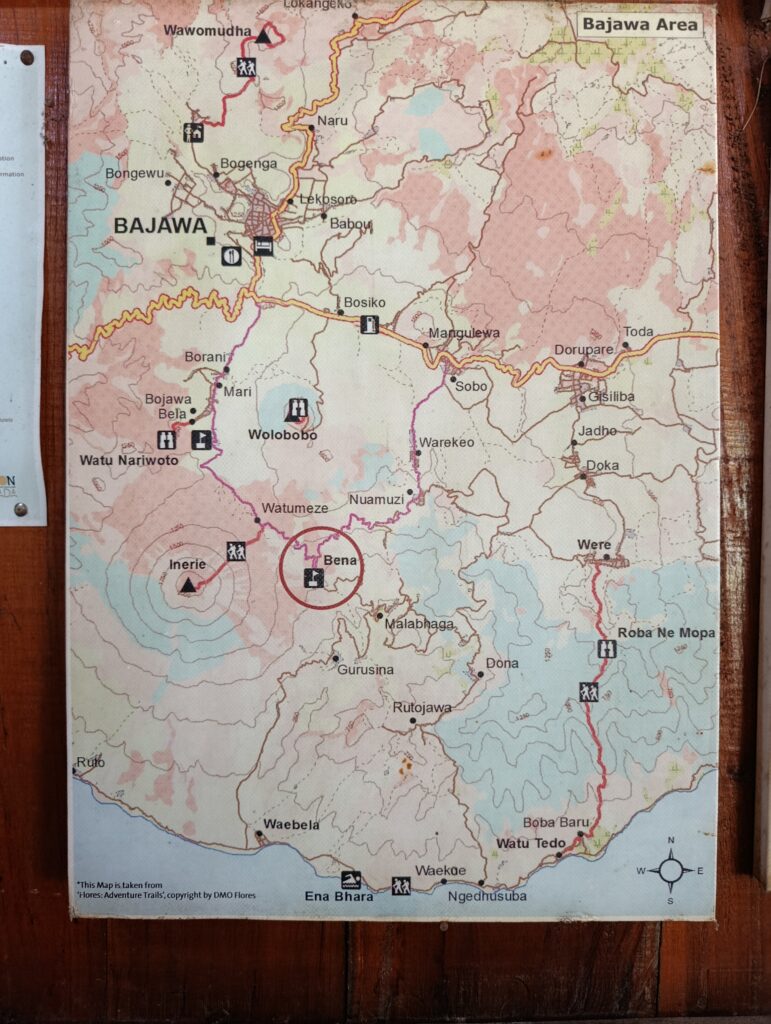
Central Flores is one of the least developed regions in all of Indonesia, with visitors only flying in to see the famed Komodo Dragons then disappearing again. In recent years, however, a small tourist trail has developed that weaves through the island’s interior taking in majestic volcanoes, and also the traditional and lively tribal villages.
Facts
- Location: Ngada Regency, Flores Island, East Nusa Tenggara Province, Indonesia.
- Population: 165,000
- Religion: Approximately 90% Roman Catholic mixed with animist beliefs; the remainder are Muslims, Protestant and Hindu.
- Language: Ngada and Indonesian.
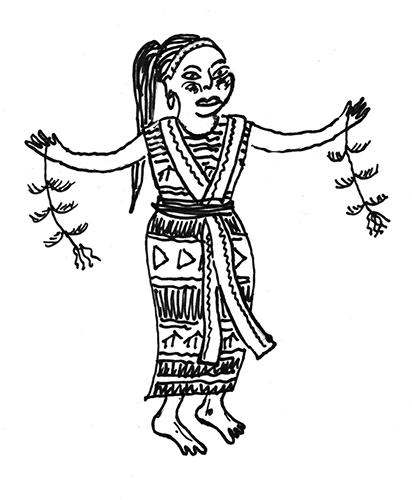
- Matriarchal features
- Children always belong to their mother’s family and clan (matrilineal).
- Women own land and houses. Mothers plant bamboo gardens for their daughters.
- The traditional house is inherited by the most capable daughter; other daughters may build houses on clan land. Brothers receive nothing.
- After marriage, the man must move to his wife’s home and works for her and her clan (matrilocal).
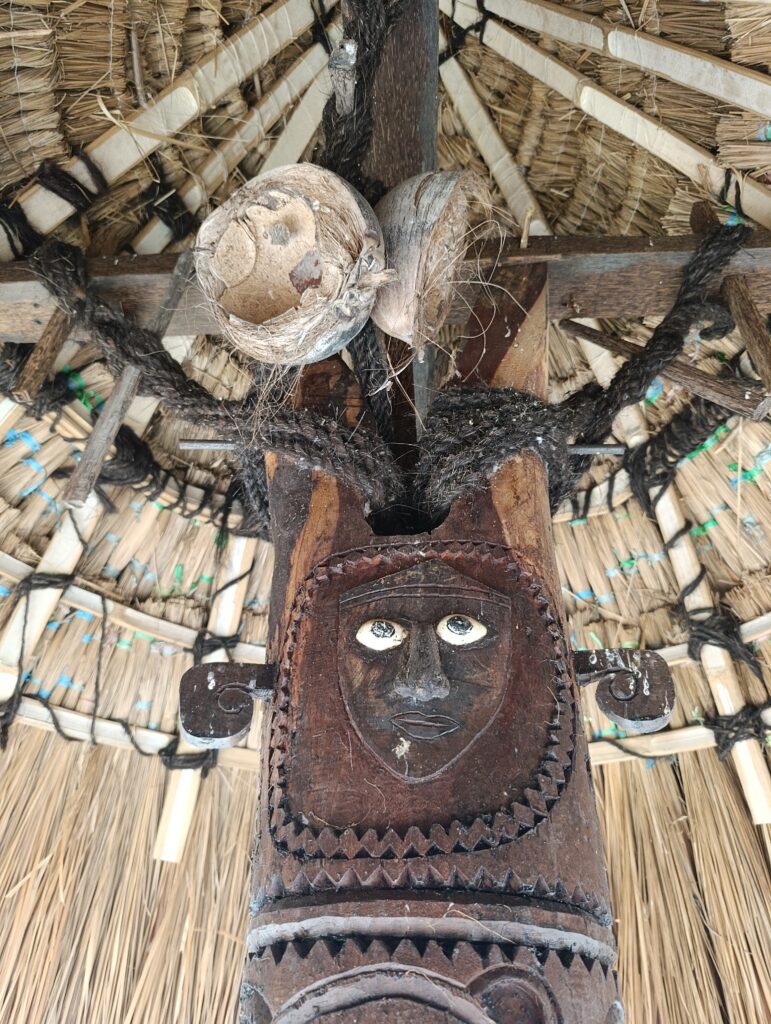
- Each clan in a traditional Ngada village is represented by a female symbol (Bhaga) and a male symbol (Ngadhu).
Bena village
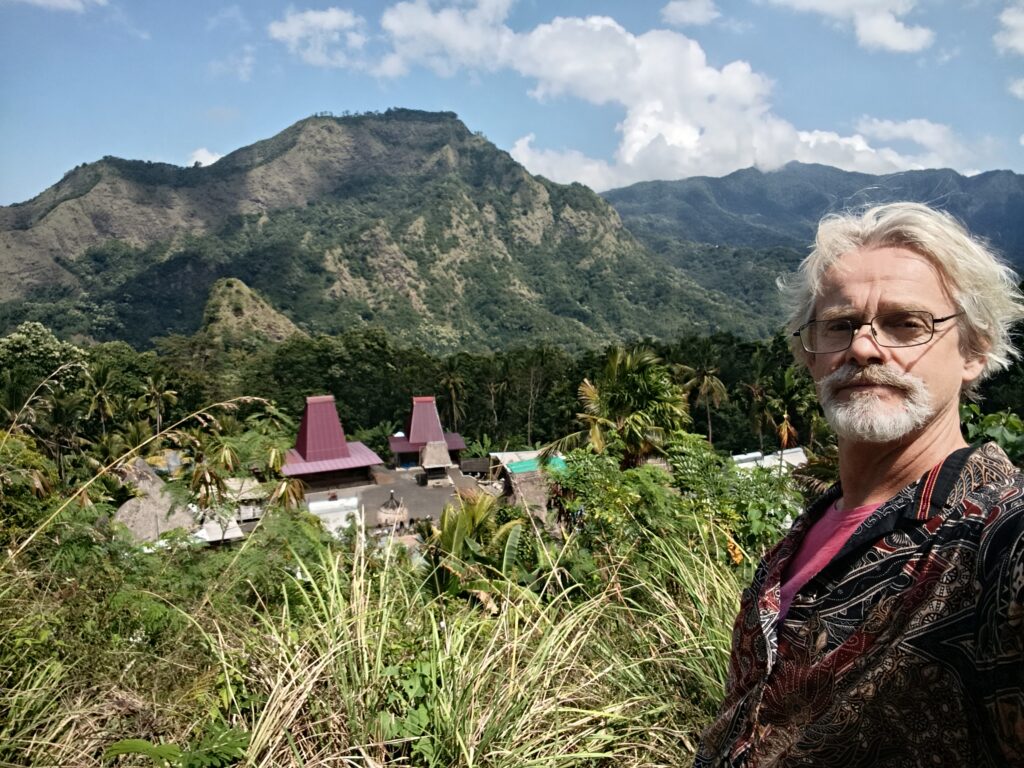
At first glance the village looked like something from pre-history! Ancient stone megaliths jutted out from the earth in jagged fashion, and all the bamboo houses were thatched and grey.
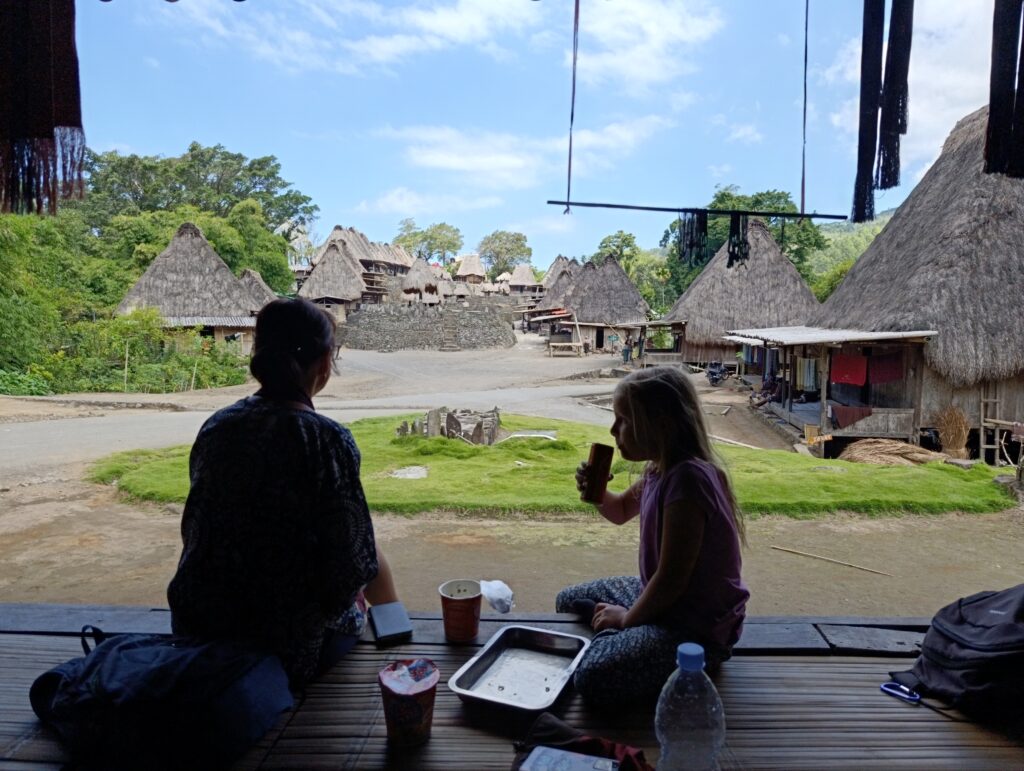
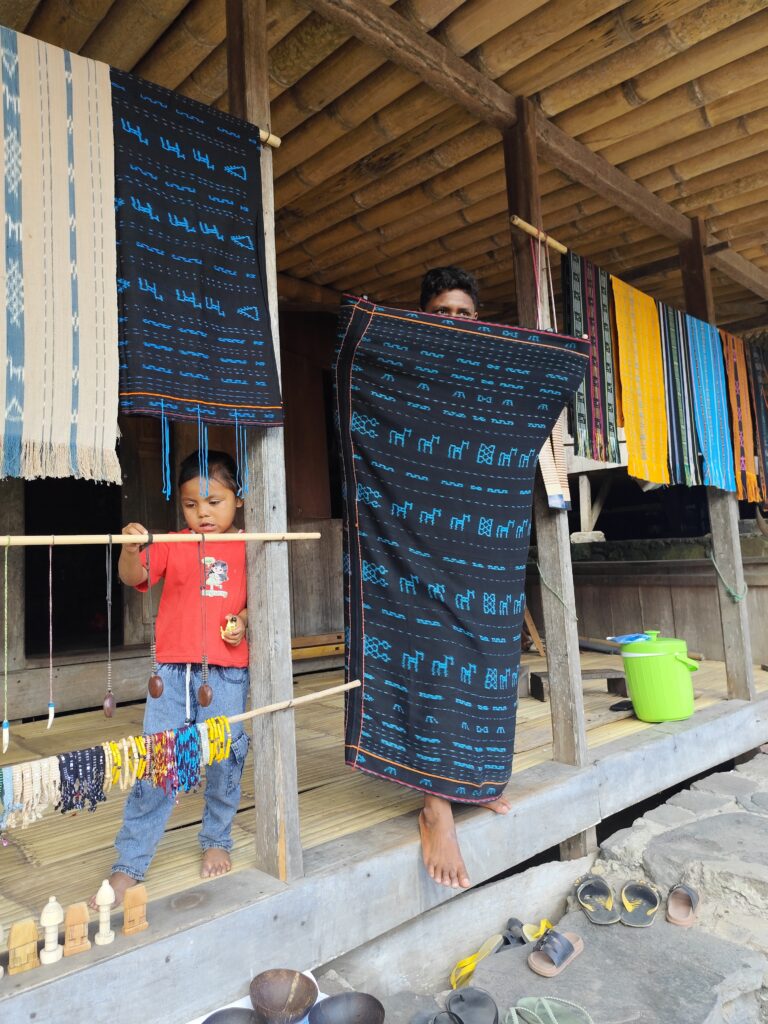
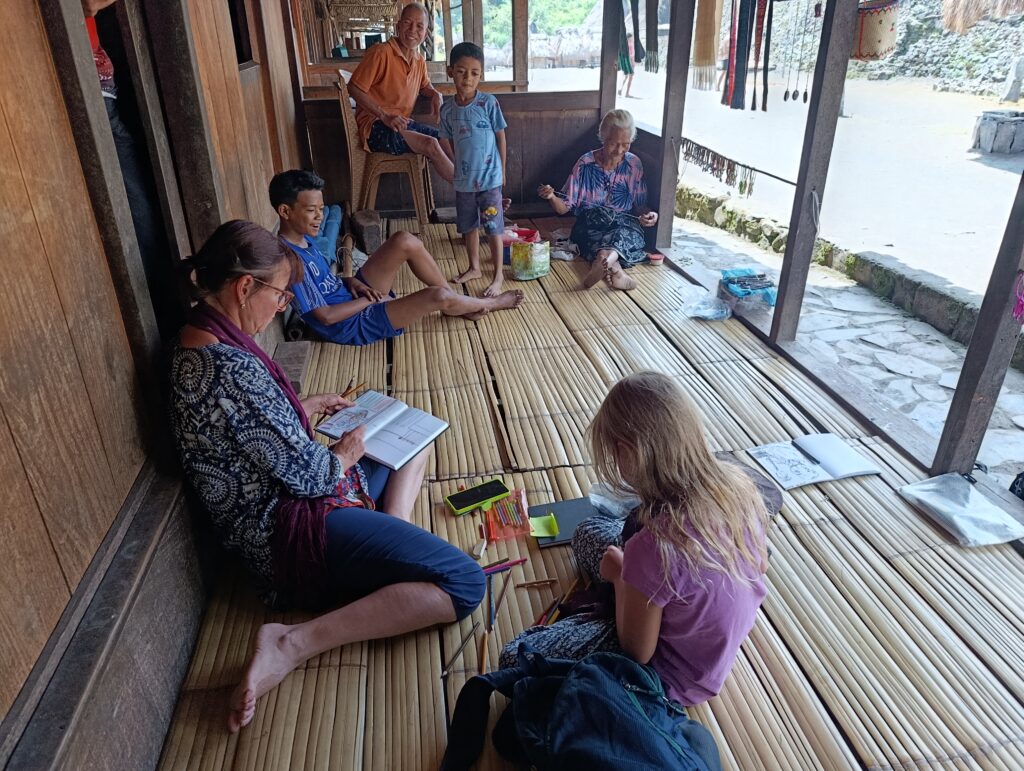
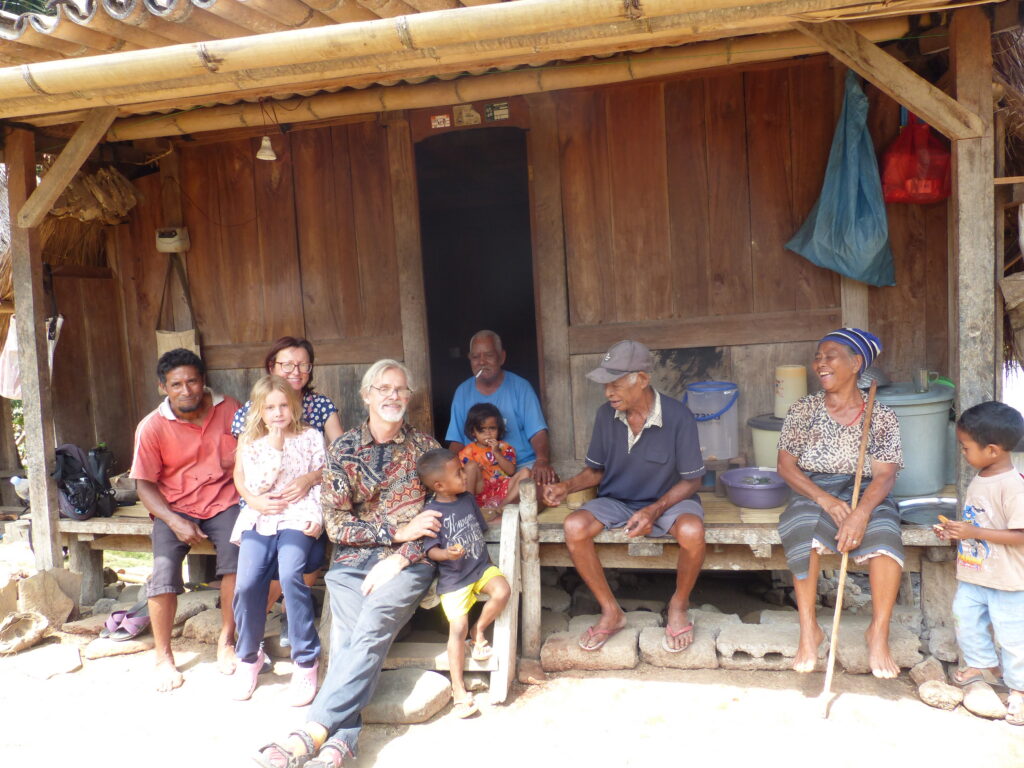
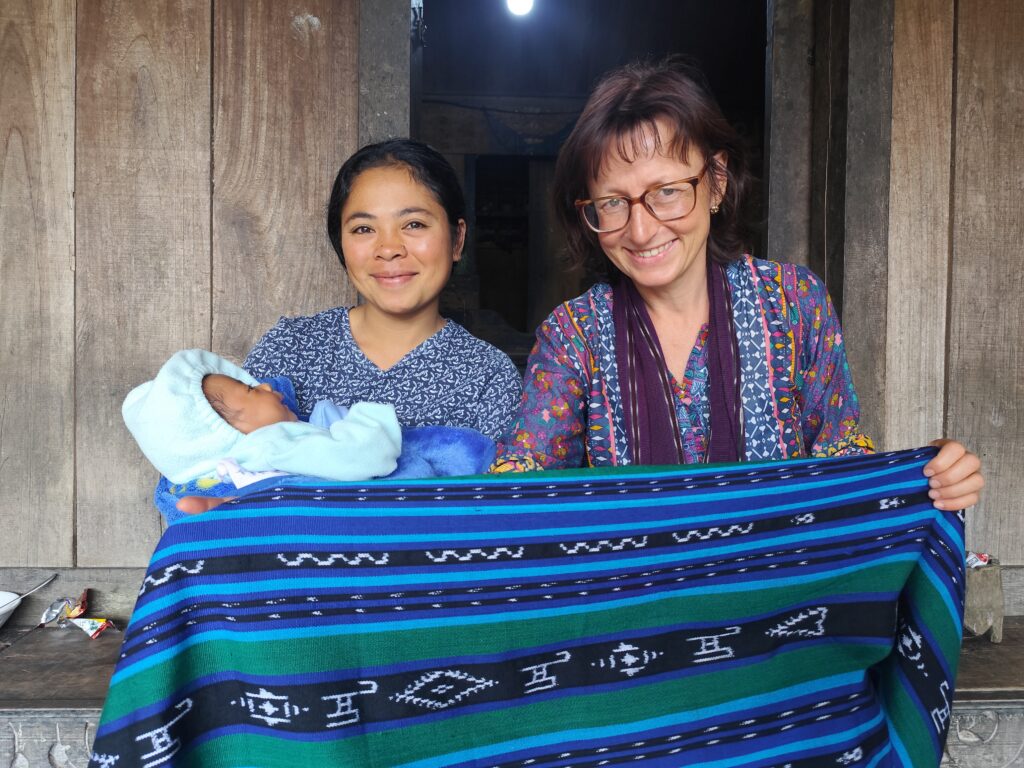
Women displayed woven ikat sarongs outside their houses for sale. Tourists arrived by tour groups in 4x4s or mini buses. Most stayed only 30 minutes or so then moved on, so for most of the day we had the village to ourselves. There was no pressure selling, instead throughout the day, we were invited to sit on various verandas for a chat and a free coffee!
Kao Sao Ceremony
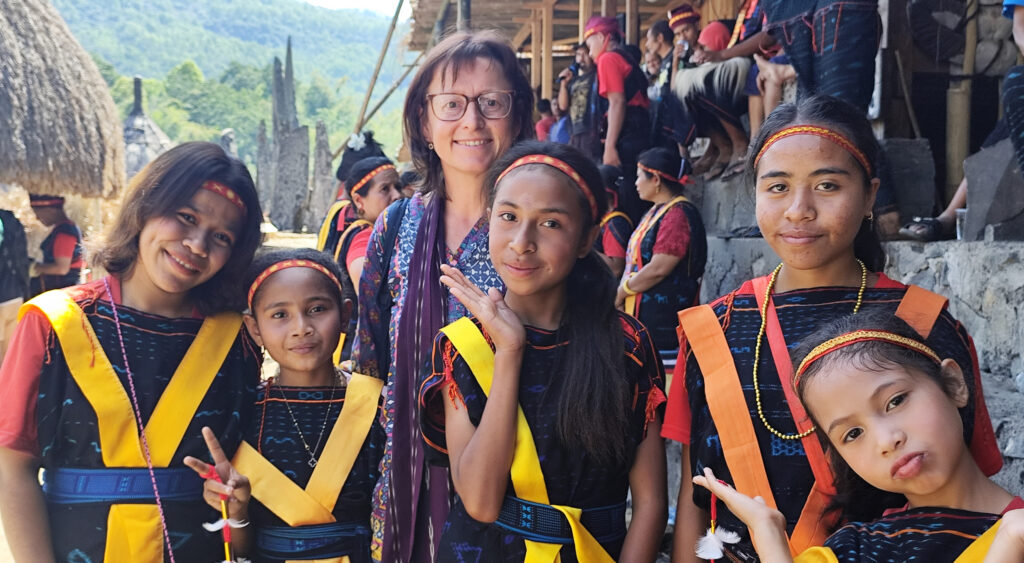
About ten men worked on finishing the new roof of a traditional bamboo house. This ritual renovation is known as Kao Sao, and must be administered in keeping with animist beliefs. Gongs and drums are played by men, while a group of women decorated with bright yellow ribbons danced gracefully in circles waving flower garlands. Men also danced in a similar fashion, but with ornately decorated machetes instead!
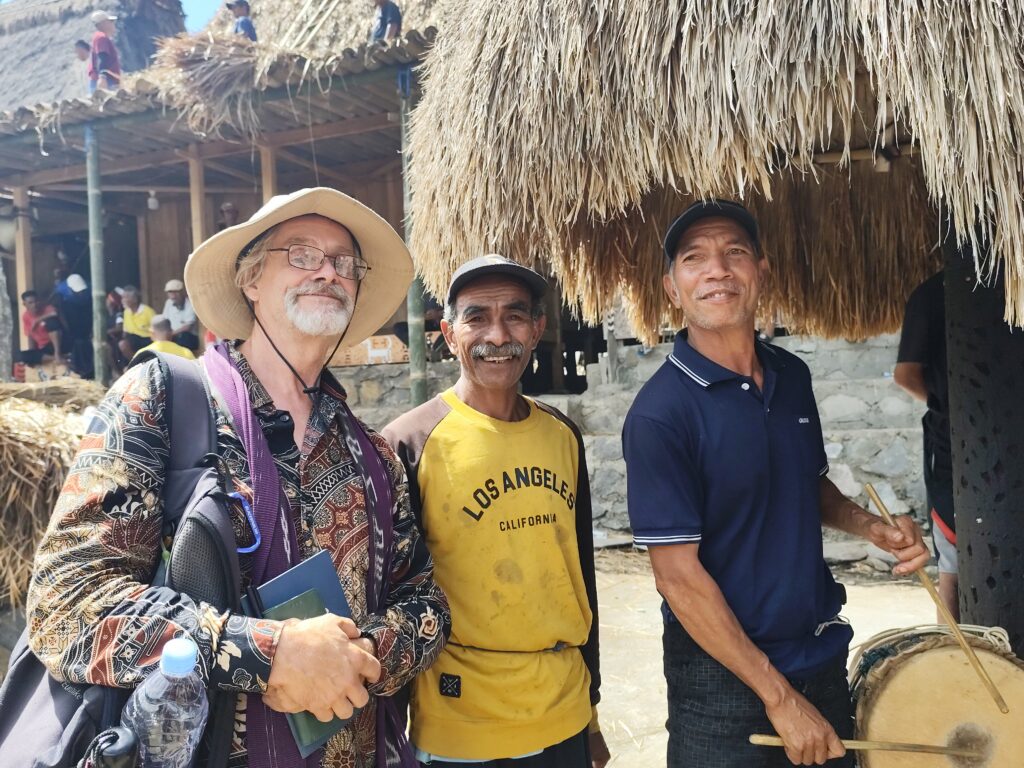
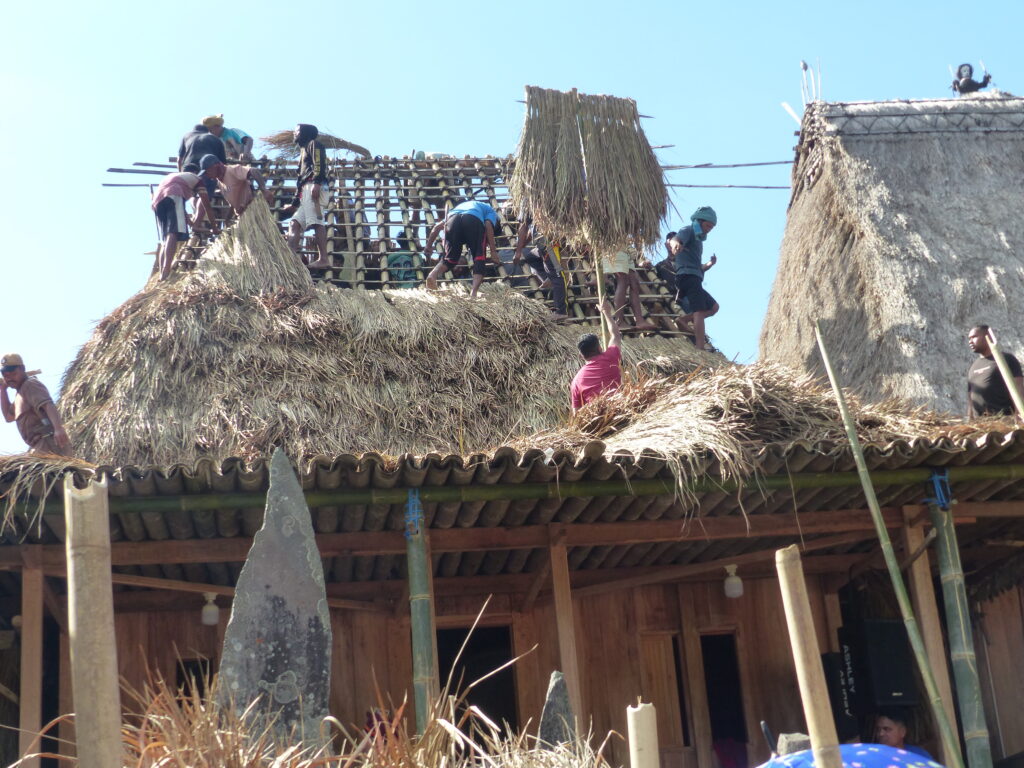
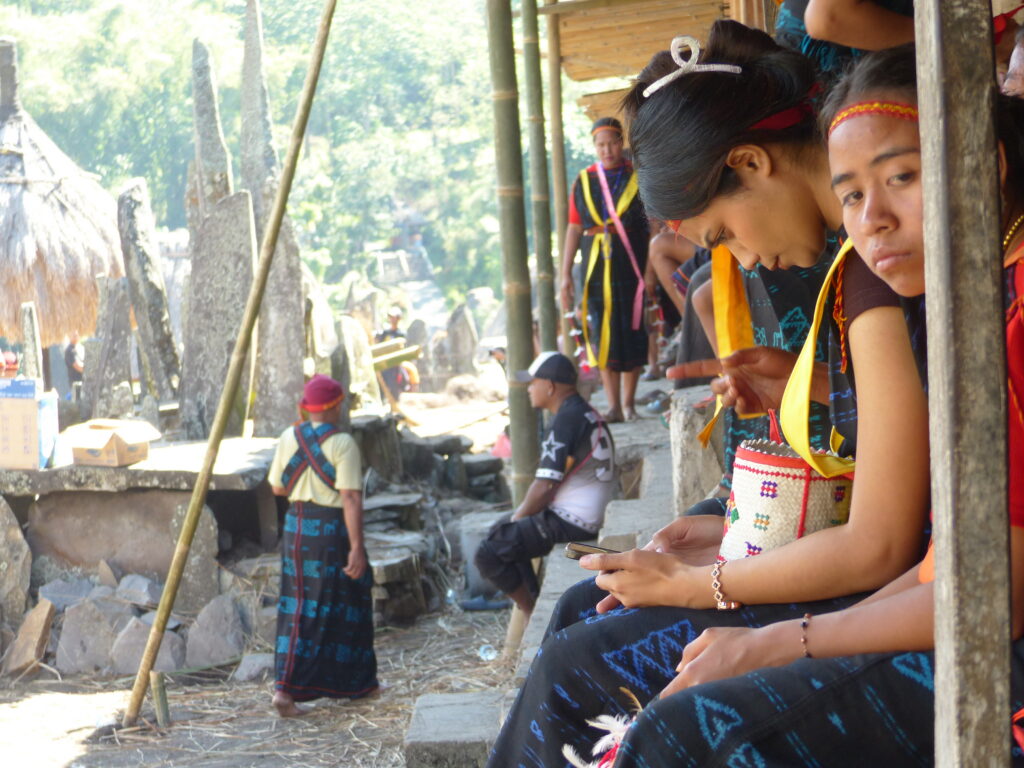
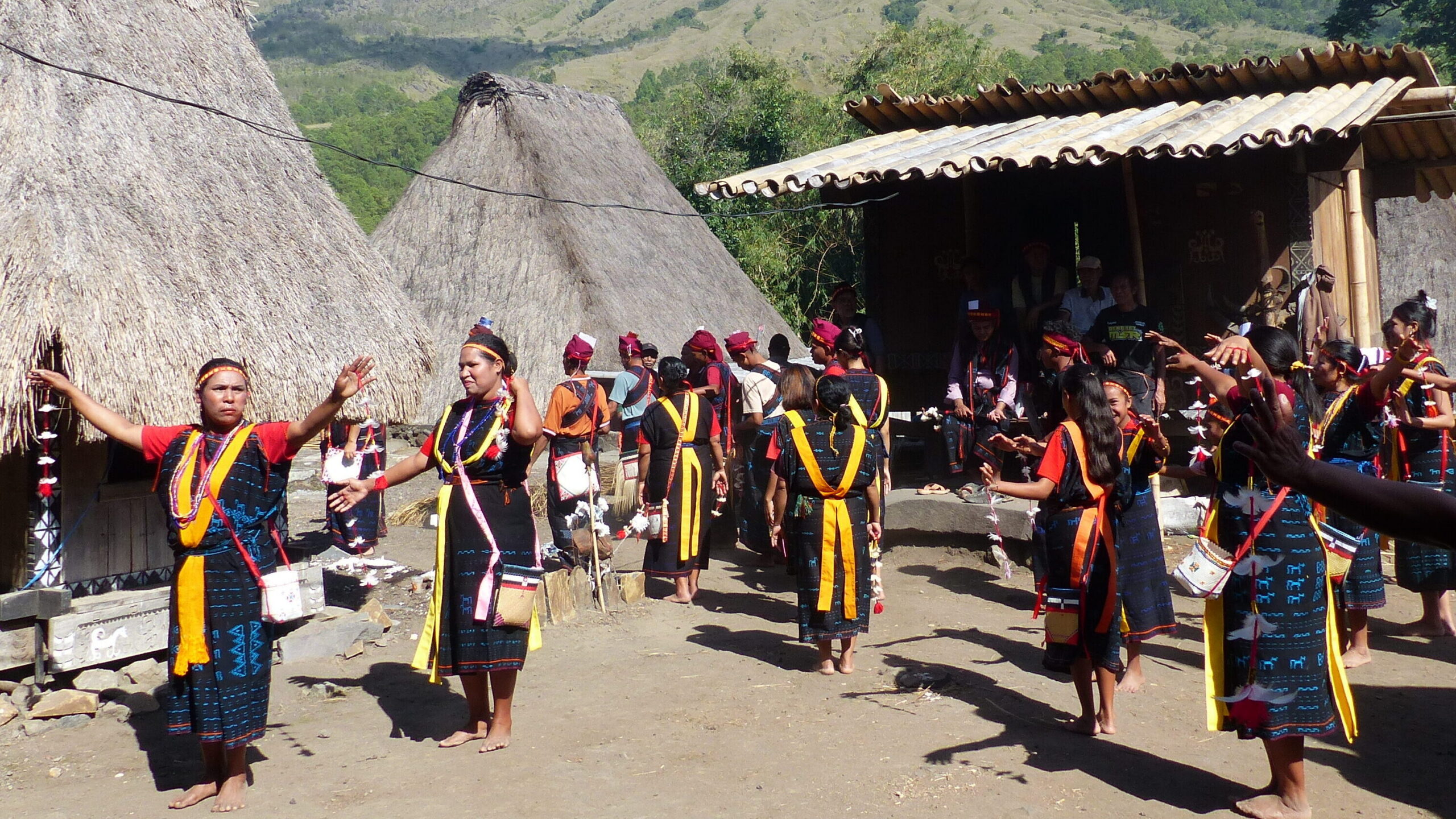

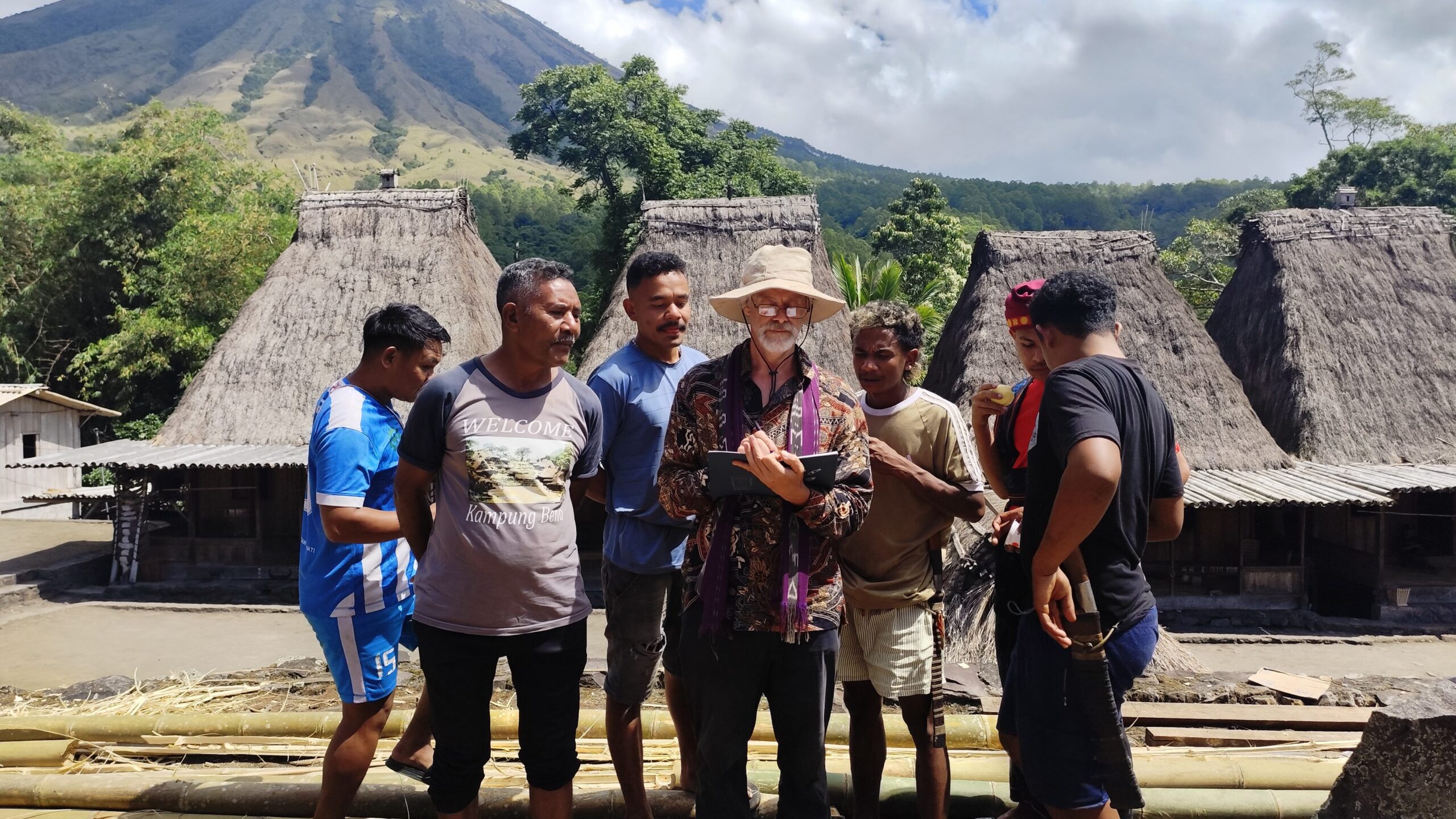
The Ngada love ceremonies and rituals that bring the community together. Families pool their money to buy several water buffalo and enough pigs to feed the whole village, extended family, and visitors from surrounding villages!
Nowadays, tourists are also welcomed and actively encouraged to join in with the festivities. Women serve us pieces of grilled pork and rice, accompanied with local rice wine! Although the Ngada are now Catholic, it is still of utmost importance to appease the ancestors and animist spirits. So, for every little alteration to the village, a large ceremony must be held.
Daughters as heiresses
The layout of Ngada villages is centred around a flat space where the male totem Ngadhu and its female counterpart Bhaga are situated. Together, they symbolize the complimentary relationship between men and women, and the unity of the clans.


The houses and land, however, belong to women, who pass them on to their daughters. In rural areas, mothers plant cocoa, coffee or bamboo gardens for their daughters.

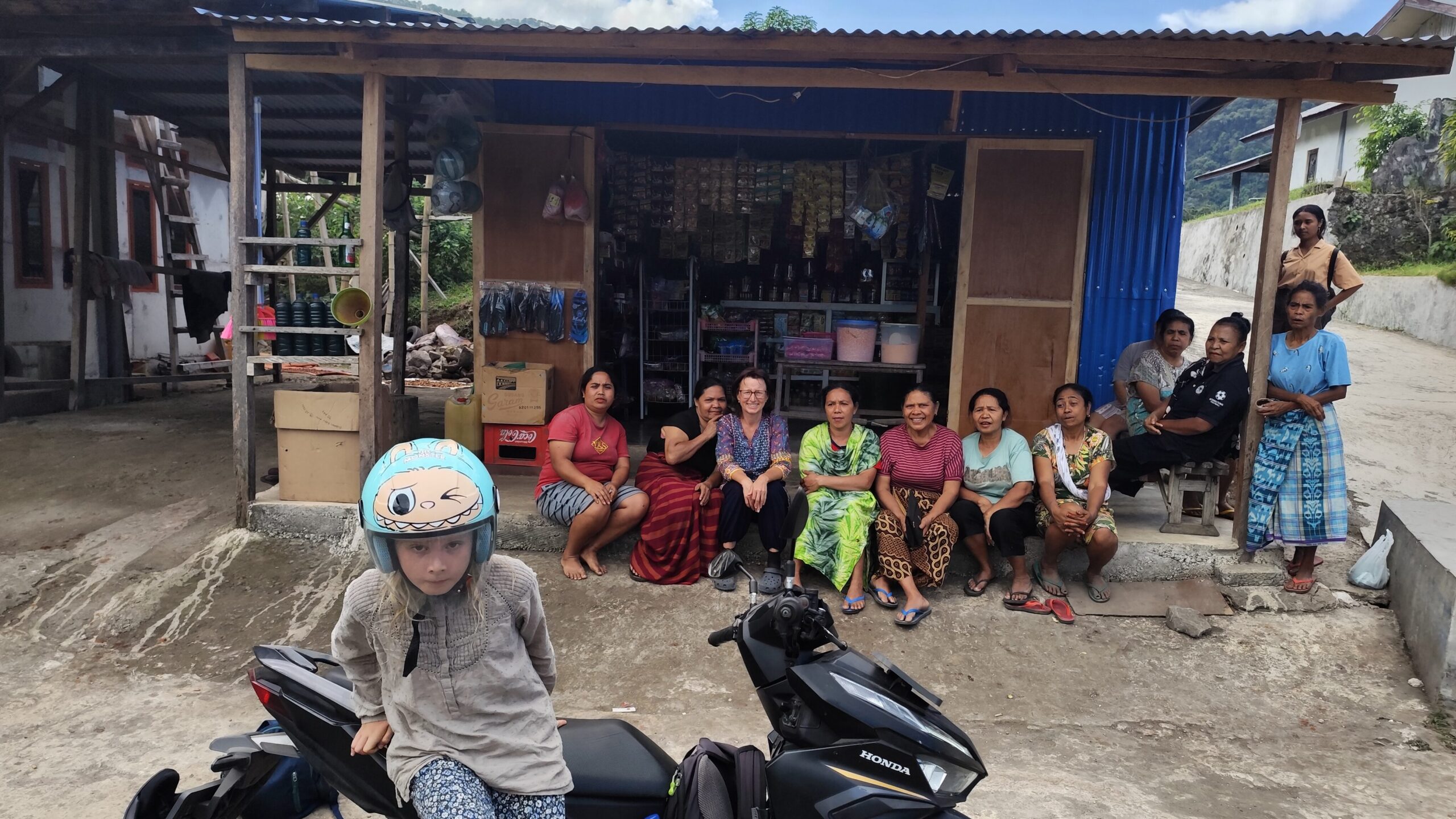
…And urban daughters can look forward to even more…
“We are a matrilineal family, so I expect my father to pass everything on to my younger sister when she returns home from collage,” Aldie says shrugging his shoulders indifferently.
Aldie is the son of a prominent guesthouse owner in the regional capital of Bajawa. He has been helping his father build the business for a number of years, and regularly takes tourists around Flores as a guide.
“She will become the boss! There is nothing here for me,” he says.
Yonas explains he wasn’t always living in the Ngada region. He used to work in a hotel in Bali, then in the touristy town of Labuan Bajo (the jumping off point for Komodo National Park). But during the Covid pandemic he decided to return home. Back in the village he met his wife to be, Florence, and then decided to stay.
We can’t help thinking, however, that he must be feeling a little let down by the system. A matrilineal system that his family feels abliged to follow, not just for the sake of their ancestors, but for the clan in today’s society too.
In future, when Aldie gets married, he will have to move to his wife’s family home. Where, if he is lucky, he will become the manager of her property and business. But this is not guaranteed, first he must be accepted by his wife’s family and clan, and will have to begin again to rebuild his life a new.

Gurusina traditional village
We stay here for three night in a traditional house belonging to the family of Florence and Yonas.
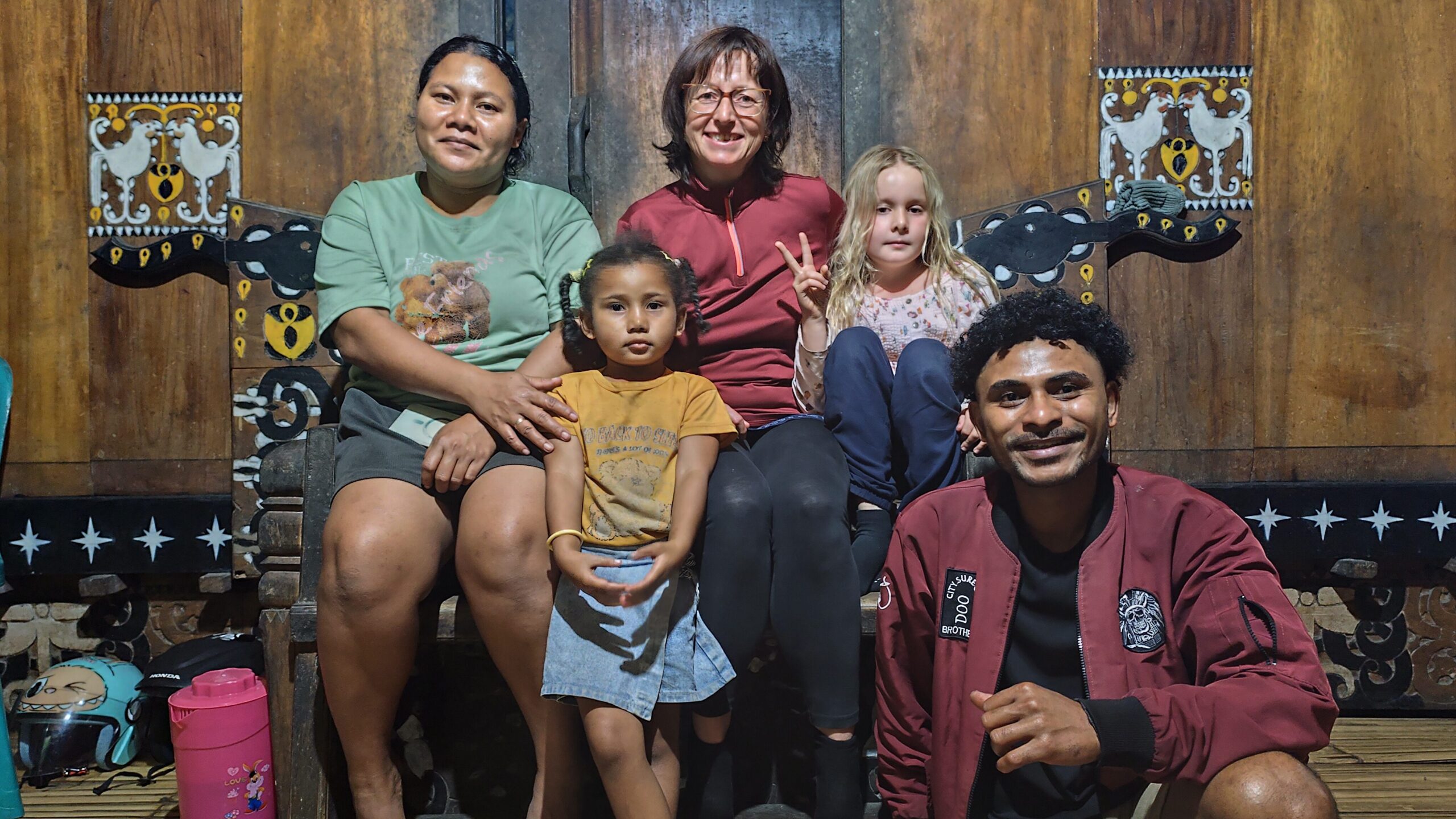

Florence showed us pictures from their wedding four years ago, in one of the photos we noticed a little girl, their daughter we were told.
According to social anthropologist Susanne Schröter, Ngada women often resort to “man-hunting!” They use their fertility as a means to trap a suitable husband! In Ngada society, if a woman becomes pregnant, it is a big stain on both clans, so the couple are usually forced to marry.
Florence is a primary-school teacher and the main breadwinner of the family. As the heiress, she runs the ancestral home and looks after her elderly mother, which is where we were staying. Yonas is described as ‘just a farmer,’ but also speaks good English and has experience of the outside world. From the perspective of a Ngada lady – Yonas is a catch!